
Drone videography opens creative possibilities that ground-based cameras cannot match. Capturing truly stunning aerial footage, however, requires more than simply flying high and pressing record. Smooth movement, thoughtful composition, correct camera settings, and deliberate use of light separate professional results from ordinary clips. The following practices, drawn from established techniques used by experienced aerial cinematographers, help produce polished, cinematic drone video.
Prioritize Smooth and Intentional Flight
Jerky or abrupt movements distract viewers and undermine the cinematic quality of aerial shots. Fly with slow, deliberate inputs. Most modern drones offer a Cine Mode or Tripod Mode that reduces maximum speed and softens stick response, making it easier to execute gentle pans, tilts, and tracking moves. Lowering stick sensitivity in the controller settings further improves control.
Plan each shot around a single primary movement whenever possible. Common effective patterns include a slow forward reveal that begins looking downward and gradually tilts up to the horizon, a gentle orbit around a subject, a tracking shot that follows a road or shoreline, and a controlled push-in or pull-out. Practicing these moves in open areas builds muscle memory and confidence.
Master Composition from the Air
Composition principles that work on the ground remain essential in the air. Apply the rule of thirds by placing key subjects or the horizon along the intersecting lines rather than in the exact center of the frame. This creates more balanced and visually interesting images.
Vary altitude and camera angle. Extremely high shots can make landscapes appear flat and distant. Many of the most striking aerial sequences are captured at lower altitudes—often between roughly 20 and 40 meters—where foreground elements create depth and a stronger sense of scale. Mixing low, medium, and high perspectives within a sequence adds variety and keeps the viewer engaged. Top-down (nadir) shots work well for patterns, architecture, or geometric landscapes, while oblique angles better convey three-dimensional form.
Optimize Camera Settings for Cinematic Results
Shoot in the highest practical resolution, typically 4K, to retain flexibility for cropping, stabilization, and reframing in post-production. Frame rate choices influence the final look: 24 frames per second delivers a classic cinematic cadence, while 30 frames per second offers a slightly cleaner modern feel. Higher frame rates such as 60 fps are useful when slow-motion is planned.
Follow the 180-degree shutter rule for natural motion blur. Set shutter speed to approximately twice the frame rate—for example, around 1/50 second at 24 fps or 1/60 second at 30 fps. In bright daylight this often requires neutral density (ND) filters to avoid overexposure while maintaining the desired shutter speed. ND8, ND16, and ND32 filters are commonly used depending on light intensity.
Keep ISO as low as the sensor allows, usually the base ISO of 100 or similar, to minimize noise. Prefer manual exposure and a fixed white balance setting rather than auto modes, which can shift mid-shot and create inconsistent clips that are harder to match in editing. When available, log or flat color profiles preserve more dynamic range for grading.
Take Advantage of Light and Timing
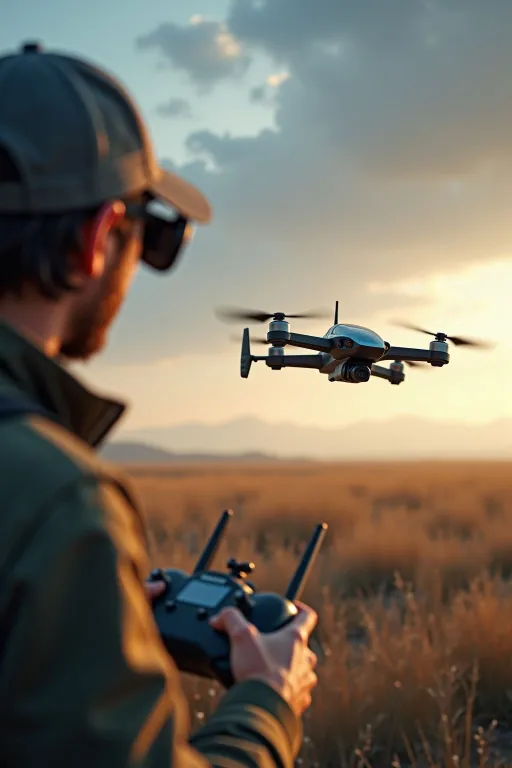
Lighting has a profound effect on aerial footage. The golden hours shortly after sunrise and before sunset produce soft, directional light, long shadows, and warm tones that add depth and mood. Midday sun tends to flatten landscapes and create harsh contrast. Whenever schedules allow, plan key shots around these favorable windows.
Scout locations in advance using maps or prior visits to identify strong leading lines, interesting patterns, and potential obstacles. Knowing the direction of light relative to the subject helps position the drone for the most flattering illumination.
Reduce Technical Artifacts
Rolling-shutter “jello” distortion can appear when the drone experiences vibration or rapid movement. Maintaining balanced propellers, ensuring the gimbal is properly calibrated, and flying smoothly reduce the problem at the source. Shooting at higher frame rates with appropriate shutter speeds and using ND filters can also help mask residual effects. In post-production, stabilization tools can further refine footage, though the cleanest results begin with good acquisition.
Plan Sequences and Fly Safely
Strong aerial videos rarely consist of isolated impressive shots. Think in sequences: an establishing wide view, a medium reveal, and closer detail or tracking shots that guide the viewer through the scene. Match the pace of movement to the emotional tone—slower for contemplative landscapes, slightly more dynamic for energy or scale.
Always prioritize safety and compliance. Maintain visual line of sight where required, respect airspace restrictions, monitor weather and wind, and ensure batteries and equipment are in good condition. A well-planned, legal flight produces better footage than a rushed or risky one.
Post-Production Complements Good Capture
Even excellent raw footage benefits from careful editing. Select the strongest segments, apply subtle stabilization if needed, correct color and exposure for consistency, and pace the cuts to the rhythm of the music or narrative. Avoid over-processing; the goal is to enhance the natural strength of the aerial perspective rather than create an artificial look.
Putting It All Together
Stunning drone videography results from the combination of smooth piloting, disciplined composition, correct exposure and shutter settings, favorable light, and thoughtful sequencing. Lower, slower, and more intentional flying often yields more compelling images than maximum altitude or speed. By treating the drone as a precise cinematic tool rather than simply a flying camera, creators can consistently produce aerial footage that feels polished, immersive, and visually memorable. Practice, planning, and attention to these fundamentals steadily elevate the quality of every flight.
Read more – gloryhouseworld.com